Blog Search

Showing posts with label Finance. Show all posts

Frozen Russian Funds for Ukraine

German Chancellor Olaf Scholz announced that European countries would use the proceeds generated by nearly $300 billion in frozen assets of the Russian Federation to purchase weapons for Ukraine.


“Ukraine’s Western backers will soon use profits from frozen Russian assets to finance military aid for Kiev, German Chancellor Olaf Scholz said. The announcement marked a shift for Berlin, which has been under pressure from allies to endorse the weapons-buying scheme.
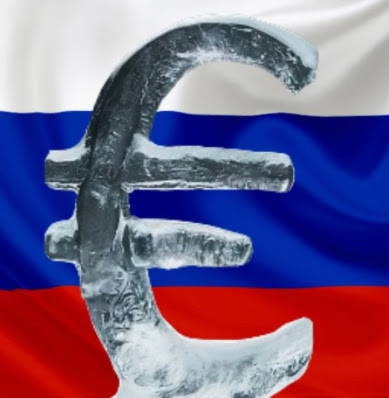


Speaking during a Friday press briefing alongside French President Emmanuel Macron and Polish Prime Minister Donald Tusk, Scholz said the leaders had agreed on a plan to distribute profits generated by the frozen assets.


‘We will use windfall profits from Russian assets frozen in Europe to financially support the purchase of weapons for Ukraine’, he said.


Much of the $300 billion in Russian central bank funds is now frozen in Belgium’s main securities depository, Euroclear, in the form of gold, government bonds and foreign currency. Though Washington and a number of EU states have called to transfer the money to Ukraine, the bloc has yet to take that step amid disagreement over how the funds should be used.


However, a plan is slowly taking shape, with the Council of the European Union agreeing to set aside profits resulting from the frozen assets last month. Additional measures will be required before the money can be transferred to EU coffers, or ultimately handed to Kiev.


According to an unnamed EU official cited by the Guardian, the bloc has devised a ‘legally robust proposal’ to confiscate some $29.5 billion in Russian profits over the next four years, with European leaders expected to announce a decision ahead of a summit in Brussels next Tuesday.


While the United States and Britain have urged Europe to seize the underlying Russian assets in addition to any related profits, EU members have been reluctant, suggesting the more aggressive approach could violate international law.


Nonetheless, Scholz’s comments on Friday appear to mark progress toward further action, as Berlin had not publicly endorsed the arms-buying plan previously.


With billions in U.S. assistance currently stalled in Congress, Kiev’s European sponsors have scrambled to boost military aid as Ukrainian troops face severe ammunition shortages and lose ground to Russian forces. France’s Macron has underscored the growing urgency in recent weeks, repeatedly declining to rule out Western troops deployments in Ukraine”. -Will Porter, Antiwar


The direct seizure of Russia's frozen assets not only runs the risk of eroding international trust in the euro’s status as a reserve currency, but the Russian central bank is likely to respond in kind by seizing around €33 billion from a Brussels-based financial service firm, Euroclear, currently held in the national settlement depository in Moscow, which could potentially deplete the company's capital and require a massive bailout.

Seizing Frozen Russian Assets

U.S. Treasury Secretary Janet Yellen has called on the United States and its Group of Seven and European Union allies to jointly confiscate funds from frozen Russian assets and redirect them to Ukraine.


“Treasury Secretary Janet Yellen on Tuesday offered her strongest public support yet for the idea of liquidating roughly $300 billion in frozen Russian Central Bank assets and using them for Ukraine's long-term reconstruction.


‘It is necessary and urgent for our coalition to find a way to unlock the value of these immobilized assets to support Ukraine’s continued resistance and long-term reconstruction’, Yellen said in remarks in Sao Paulo, Brazil, where Group of 20 finance ministers and central bank governors are meeting this week.


The United States and its allies froze hundreds of billions of dollars in Russian foreign holdings in retaliation for Moscow’s invasion of Ukraine. Those billions have been sitting untapped as the war grinds on, now in its third year, while officials from multiple countries have debated the legality of sending the money to Ukraine. More than two-thirds of Russia’s immobilized central bank funds are located in the EU.


Using the assets to help Ukraine ‘would make clear that Russia cannot win by prolonging the war and would incentivize it to come to the table to negotiate a just peace with Ukraine’, Yellen said.


The idea of using Russia’s frozen assets has gained traction lately as continued allied funding for Ukraine becomes more uncertain and the U.S. Congress is in a stalemate over providing more support.


Yellen said Tuesday that it is ‘extremely unlikely’ that tapping the frozen funds would harm the dollar's standing in the global economy ‘especially given the uniqueness of the situation where Russia is brazenly violating international norms. Realistically there are not alternatives to the dollar, euro and yen’, Yellen said”. -Fatima Hussein, Associated Press


Although legislation has been introduced in both chambers of the U.S. Congress to give the White House the authority to establish a “Ukraine Support Fund” in order to secure funds for the Ukrainian war effort using Russian profits, only about $67 billion of the frozen money is being held by the United States Federal Reserve, as $61 billion in further U.S. aid to Ukraine has been blocked by the House of Representatives.

Russia Faces New Wave of Sanctions

The United States, United Kingdom, and European Union have all announced a new round of sanctions against Russia, a day prior to the two-year anniversary of the beginning of the Russo-Ukrainian war that broke out on February 24th, 2022.


“So many sanctions. Once again, the United States, United Kingdom and European Union are hitting Russia with a new wave of sanctions over Moscow’s invasion of Ukraine.


With Friday’s latest round of sanctions — landing one day before the second anniversary of the war — the U.S. has targeted more than 4,000 officials, oligarchs, firms, banks and others. The EU has targeted more than 2,000 people and entities, including Russian President Vladimir Putin and his associates.


The latest sanctions focus on people and firms connected to Russia’s weapons manufacturing, finance and import sectors. They also target three officials that Western leaders say were involved in the death of Navalny and others they hold responsible for kidnapping and reeducating Ukrainian children.


Many of the new sanctions target Russian firms that contribute to the Kremlin’s war effort — everything from drone and industrial chemical manufacturers to machine tool importers. The EU is also targeting foreign firms that officials say have exported dual-use goods to Russia that could be used in the war.


Eswar Prasad, a Cornell economist, says the latest sanctions are ‘likely to be of limited potency in stifling Russia’s economy or its war effort’. He said the ‘escape valve’ provided by China, Russia’s ability to maneuver around many of the sanctions and the impasse in Congress over new military aid for Ukraine ‘have substantially eroded the symbolic and substantive power of such sanctions’.


The West still has other options to consider in further punishing Russia.


The U.S. and Europe are considering the use of $300 billion of Russia’s frozen central bank assets to fund Ukraine as reparations for the war, but that’s a legally complex matter. The U.S. could also designate Russia a state sponsor of terrorism, an idea that has gained bipartisan popularity in the U.S. Congress”.  -Associated Press


Ahead of the two-year anniversary of the Ukrainian conflict, given that the Western sanctions come at a time when Russia has secured the upper hand on the battlefield with its latest victory in capturing Ukraine’s eastern town of Avdiivka, it has become increasingly apparent that the goal of the U.S., UK, and EU all along has been to completely deplete Ukraine before directly engaging Russia in war.

From Cradle to Grave

The stubborn refusal on behalf of most American citizens to link the fiscal decline of the United States with the, for lack of a better term, demographic adulteration of United States is not only regrettable but very unlikely to be abandoned anytime soon.


We live in a culture where the majority of the populace is effectively coerced into doing everything they can to try to deny something undeniable because even stating an observable fact in this day and age is customarily viewed as a sign of poor character.


This leads to a sort of pseudo-rational form of thinking, which, in most people, is indicative of an unwillingness to acknowledge and accept the often harsh, unpleasant truth. No matter how deliberate it may be, it’s always done in the hopes that their surrender and subservience to the lie will peacefully resolve the situation, which may be tenuous at best.


Nonetheless, this entire act is totally futile, seeing as, without the truth, peace comes at a very high cost.


Average annual net tax benefit per white/black/Hispanic U.S. citizen

Data derived from the 2014 U.S. federal budget


Take notice of the amount of money that has been spent unsuccessfully trying to turn a mostly unwilling nation of black Americans into essentially manufactured white Americans. It’s possible that the greatest transgression of the Civil Rights debacle of the last seventy years is the opportunity cost. And that would not mean diminishing the tangible expenses concerning all the lost landmarks, neighborhoods, suburbs, cities, etc. that have fallen victim to the enlightened “war on racism”.


Budgetary Impact of whites, blacks, and Hispanics in 2014


Whites

$553.52 billion


White Per Capita

$2,795


Blacks

(-$389.71) billion


Black Per Capita

(-$10,016)


Hispanics

(-$411.95) billion


Hispanic Per Capita

(-$7,298)


Let’s set aside the fact that when one extrapolates these numbers over the course of an average seventy-nine-year lifespan, the average lifetime annual net contribution for a white person is $220,805 while the average lifetime annual net contribution is (-$751,200) for a black individual and the average lifetime annual net contribution for a Hispanic individual is (-$576,542).


The average white individual paid an annual $2,795 into society, while their black and Hispanic counterparts received a surplus of $10,106 and $7,298 per individual, respectively. In other words, the average white person in America produced nearly three thousand dollars more in annual net benefit than he was permitted to consume or keep to himself.


If you are a white American, throughout your lifetime, the federal government will, on average and on your behalf, transfer $384,109 of your wealth and income to a single black individual.


Whether someone chooses to conclude that these numbers express a significant problem or that it is simply the necessary cost for maintaining our civilization, this data should suffice to explain why importing forty million Latinos into the country has not fixed the American economy.


Nevertheless, it’s made painstakingly obvious that the ongoing demographic shift from a predominantly white society to a less productive, less white one would expect to have negative effects on the long-term economic prospects of the United States.


In the meantime, attitudes of tolerance and inclusivity among the general public are bound to develop into feelings of distaste and even contempt.


Perhaps the most harrowing realization that will come to be accepted by most otherwise moderate people may well be the complete and utter failure of the Civil Rights Movement and, in particular, the ever-increasing material evidence that the supposedly evil, hate-filled opponents of racial integration have been proven right over time.


“He that tilleth his land shall have plenty of bread, but he who follows frivolity will have poverty enough”


             -Proverbs 28:19

Oil Coalition Accepts Brazil

Brazil's energy minister has announced that the country plans to align more closely with the world's biggest oil cartel, the Organization of the Petroleum Exporting Countries Plus (OPEC+).


“Brazil is set to join the OPEC+ group of the world’s largest oil-producing countries from January of 2024, Energy Minister Alexandre Silveira announced on Thursday.


Led by Saudi Arabia and Russia, OPEC+ comprises the Organization of the Petroleum Exporting Countries and its allies, and together pumps around 40% of the world’s crude.


Brazil’s membership announcement was made during an OPEC+ meeting to discuss oil output strategy for next year.


‘President Lula [da Silva] confirmed our entry into the OPEC+ cooperation charter from January of 2024’, Silveira told the group, according to a video circulated by delegates.


The move comes after OPEC+ members Saudi Arabia, Iran, and the UAE were invited to join the BRICS group of major emerging economies, which currently consists of Brazil, Russia, India, China, and South Africa.


Brazil extracted record volumes of oil and gas this past summer. It is set to ramp up its energy output by 75% in 2030, and has boosted the development of its oil-rich offshore reserve trapped below a 2,000m-thick layer of salt.


Brazil exported an average of 1.8 million barrels of oil per day (bpd) in the third quarter of 2023, marking a 40% increase year-on-year, according to official data.


It is not clear yet if the Latin American country would be required to conduct production cuts starting next year as a result of its membership.


The OPEC+ group agreed this week to deepen output reductions to about 2.2 million bpd in 2024”. -RT


OPEC+ was founded in late 2016 when Azerbaijan, Bahrain, Brunei, Kazakhstan, Malaysia, Mexico, Oman, Russia, South Sudan, and Sudan joined forces with the Saudi-led OPEC to prop up falling prices.


Now, as the addition of Brazil as the twenty-fourth partner of OPEC+ comes amid uncertainty over oil supplies from U.S.-sanctioned OPEC nations and concerns over subdued demand from China, the world’s largest energy consumer, another BRICS member’s inclusion into the cooperation charter of the OPEC+ oil alliance will potentially expand the oil bloc's future control over the international market.

Twelfth Round of Sanctions Stalled

The European Union’s twelfth round of anti-Russia sanctions talks have reached a gridlock due to Hungary’s flat-out rejection of the proposed measures.


“Talks on the EU’s 12th round of anti-Russia sanctions have stalled over Hungary’s complete objection to the entire package.


According to Rikard Jozwiak, it is unclear whether an agreement on the issue will be reached before Christmas.


‘First debate among EU ambassadors today on the new and possibly weakest EU sanctions package to date on Russia’, Jozwiak wrote. He added that there were ‘lots of comments’ as Budapest ‘put full reserve on entire package’.


According to the Guardian, the latest EU sanctions package includes restrictions on dozens of individuals, including the son of the former president of Russia and current Security Council deputy chairman, Dmitry Medvedev, and on a relative of Russian President Vladimir Putin.


Commenting on the EU’s sanctions policy, Russian Foreign Ministry spokeswoman Maria Zakharova said Wednesday that Moscow has been adapting to sanctions restrictions for many years and will continue to do so. She called the anti-Russian measures ‘an unprecedented blow to the EU countries, delivered by the EU officials themselves’.


The official noted that the EU’s potential for economic growth has been ‘completely exhausted’ and that the majority of the bloc’s members ‘suffer from chronic budget deficiency and excessive state debt’.


Since Russia’s years-long conflict with Ukraine turned into a military conflict in February of 2022, Brussels has implemented 11 packages of sanctions against Moscow. The number of restrictions has reached tens of thousands, although officials in the EU and U.S. have repeatedly admitted that the negative impact of the penalties on Russia has not been as significant as expected. The measures target various sectors of the national economy, financial institutions, and trade, as well as blacklisting several hundred Russian individuals and legal entities.


Many economists worldwide have repeatedly pointed out that Western sanctions have failed to achieve the declared goal of destabilizing Russia and its financial health. While initially, the economy suffered a downturn as a result of restrictions, it has now largely recovered after redirecting trade to the East, according to the Finance Ministry”. -RT


Budapest has thoroughly criticized Brussels’s sanctions on Russia over its actions in Ukraine, insisting that it is focused instead on helping reach a peaceful resolution to the hostilities.


And given Hungary’s previous opposition to Ukraine’s EU membership talks, the chances of the European bloc stretching all the way to Lugansk as Brussels had hoped seems appreciably remote at this stage.

Ukraine Fatigue Sets In

Ukrainian officials are reportedly “freaking out” over the uncertainty about whether more aid for Ukraine will continue to be passed through by Congress, according to a member of the Ukrainian parliament.


“‘We are freaking out. For us it is a disaster’, said Ivanna Klympush-Tsintsadze, an MP who chairs the committee on Ukraine’s integration into the EU. ‘We are interested in getting things sorted out so American democracy can function, and so we can restore the bipartisan consensus on supporting their own national interest by supporting Ukraine’.


The ouster of Rep. Kevin McCarthy as House speaker means there will likely be no legislative action until a new one is elected. ‘Until a new speaker is elected, the House cannot vote on laws, but all other work, including in committees, continues’, Ukrainian Ambassador to the United States Oksana Markarova said in a statement on McCarthy’s ouster.


Markarova said separately that there is at least $1.6 billion left for the U.S. to arm Ukraine using the Presidential Drawdown Authority. However, the Pentagon told Congress there is $5.4 billion left in Presidential Drawdown Authority for Ukraine, which became available thanks to an ‘accounting error’ that overvalued previous arms shipments.


Markarova also said there was $1.23 billion left in budgetary aid, which the U.S. provides through the World Bank and pays for Ukrainian government services and salaries, among other things. The Wall Street Journal reported on Tuesday that the U.S. only has enough budgetary aid to pay for the month of October and that the funds would dry up if Congress doesn’t authorize more aid”. -Dave DeCamp, Antiwar


If the United States does not continue to finance the Kiev regime, Brussels and the member states of the European Union could potentially increase spending on economic aid for Ukraine.


Likewise, Estonian Foreign Minister Margus Tsahkna has confirmed reports from Brussels that the European Union plans to officially announce the start of negotiations on Ukraine's accession by the end of the year.


Ukraine would be joining eight other candidate nations who are seeking accession to the EU. These nations include Turkey, Albania, Georgia, Serbia, North Macedonia, Moldova, Montenegro, and Bosnia and Herzegovina.


While the inclusion of the nine countries into the bloc would force all EU member states to pay more to and receive less from the EU’s existing budget, resulting in a redistribution of funds within the union, according to an internal study conducted by the secretariat of the EU Council, the Czech Republic, Estonia, Lithuania, Slovenia, Cyprus, and Malta would all no longer be eligible for cohesion funding on account of the expansion.